"You need to be aware of what others are doing, applaud their efforts, acknowledge their successes, and encourage them in their pursuits. When we all help one another, everybody wins." – Jim Stovall
What is a team?
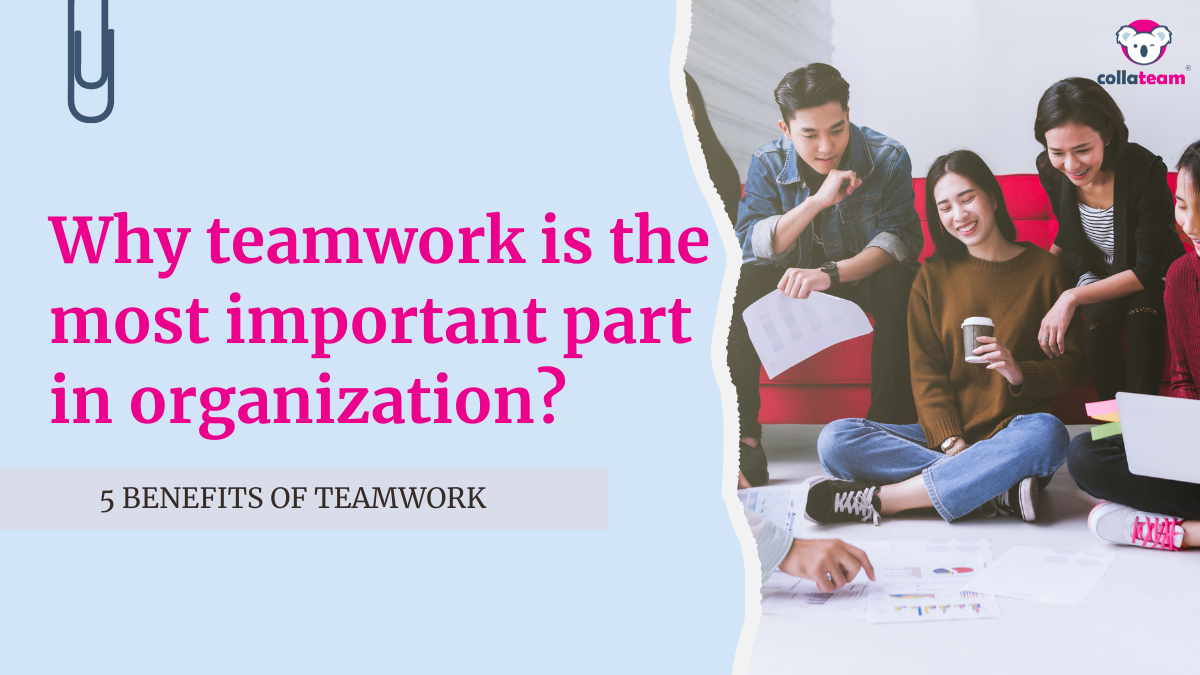
A team is described as a group of people who share specific skill sets, knowledge, and expertise and work together to complete the related tasks. Teamwork motivates employees to work together on an objective: to complete tasks within the time frame. Employees who work in groups are more productive, competent, optimistic, satisfied, and innovative than persons who decide to work alone. They tend to produce faster results than employees who must do everything themselves. A person with multiple responsibilities will not be capable of completing the project on time.
Why is being able to work in a team necessary?
Assures a positive work atmosphere.
Generally, we usually receive support from our environment, and when things get tough, the team should band together to deal with whatever issues arise. This is where the team's sense of spirit is shown, and employees no longer feel they are only working for themselves. They are now collaborating on something bigger than themselves. Developing a strong team spirit is difficult as it requires teammates to accept and oppose different points of view and ways of doing business. However, before they can see past their differences, they must recognize that they are working toward a common goal.
Improve work efficiency.
Following an idiom that says ''two head is better than one'' is the function of teamwork, who work together to achieve the goals faster. Teamwork practices can support us to be more creative and productive. They encourage the team to divide the workload, ensuring project completion and meeting deadlines while lowering personal burdens. This makes goals more reasonable, improves performance, and increases job satisfaction. Compared to a single employee working alone, a group of people working together increases work output and the ability to complete tasks faster.
Opportunity to grow together.
Experts who work together can gain knowledge from one another's mistakes. This allows them to learn new techniques and theories from more senior staff and discover new ideas from younger colleagues. Individuals can also strengthen and broaden their skills and abilities, gain insight from different points of view, and avoid future mistakes. This eventually contributes to creating relevant results and strategies for the tasks. In addition, active employee engagement encourages creative solutions to issues and better idea creation.
Offers different viewpoints and suggestions.
Good teamwork structures in our organization provide a diverse range of ideas, innovation, standpoints, possibilities, and problem-solving approaches. Good team surroundings enable people to think creatively, improving their ability to solve problems and arrive at more efficient and effective solutions. Great teams also allow the initiative to encourage innovation, resulting in a competitive advantage in achieving goals and objectives. Sharing opposing viewpoints and observations would help and aid in making effective decisions more quickly than when done alone.
Minimize employee turnover.
Teams that lack teamwork and collaboration encounter lower levels of performance and growth. As a result, it becomes more challenging for them to perform effectively, and as a result, they fail to achieve their long-term goals. Employees become disappointed and quit when they discover they cannot carry out their duties. The value of teamwork creates a welcoming environment where staff can smoothly fulfill their responsibilities, which helps to reduce employee turnover.
How to promote teamwork in the workplace?
The leader must pave the way.
As a leader, you must act as a role model for how you want your team to perform. In addition, you must develop a collaborative mindset within yourself. Include your team in your project and, where possible, get involved in theirs. Assist at all stages of their projects and learn how they work. Some of your employees may be less willing to seek your assistance, but they will appreciate your efforts to make the workplace more team-oriented if you offer it. You set an example by presenting yourself as a vision the team wishes to build. Then, set an example for everyone else to follow, and you’ll see the team working together without you even having to request it.
Set goals for the team.
Everybody in your company should aim for the same goals and objectives. This should be the same when working as a team. If you want to motivate your employees to participate actively, you must establish realistic goals for them to strive for. For example, how can you expect them to know when to work as a team if there is nothing concrete or seemingly achievable to work towards? However, providing clear instructions for what you want them to accomplish will soon have them working as a team toward a common goal.
Arrange team-building events.
Organizing a team-building activity at work could be the source of your teamwork. But how can you create a teamwork environment if you don't actively boost it? These programs do not have to be on a grand scale. For example, you can introduce a team-working culture by turning regular meetings into activities. In sessions, encourage your team to team up to solve problems and set challenges for them to overcome collectively. By observing which team members work well during these activities, you can place your employees in groups for teamwork.
Are you looking for a new team to join?
Let's visit Colla.team and explore our job portal where you can discover a bunch of new team to join! For more information, feel free to reach us at Whatsapp https://wapp.my/60189782066/ (Carmen).